
These minimalist mood tracker ideas will help you start bullet journaling without feeling overwhelmed. Check them out!

Not artistic?
Too busy for complicated bullet journal spreads that take forever to set up?
I get it.
If you’ve ever wanted to track your mood but felt overwhelmed by all the fancy designs online… you’re not alone.
As a busy mom of two boys, I just don’t have hours to draw, decorate and perfect every page.
But as I’ve been doing this for years, I realized, you don’t need those fancy pages. When you’re busy, what you need is actually just something simple and quick to set up.
And that’s what these minimalist bullet journal mood trackers are!
No complicated layouts. No pressure to be creative. Just clean, easy trackers you can make in minutes and stick with every day.
So, if you’re like me who is also constantly looking for something that works in real life (even on your busiest days), you’re going to love this post!
Save this for later so you can come back and try these minimalist mood tracker ideas this month, especially on days when you want something simple and doable.
How to Create a Minimalist Mood Tracker (Step-by-Step)
Before we dive into the specific layouts, let me give you first a short tutorial on how to create a minimalist mood tracker so it’s easier for you to follow.
It doesn’t have to be complicated. In fact, the simpler it is, the more likely you are to stick with your mood tracker.
So, here’s a quick and easy way to set one up:
1. Choose 3–5 moods only.
Keep it simple. Pick a few moods that represent your usual days. These can be happy, tired, stressed, calm, or sad.
Too many options can make tracking feel overwhelming.
2. Assign colors or symbols.
Choose a color or simple symbol for each mood.
For example: Yello for happy, Red for stressed, Gray for tired
This makes your minimalist mood tracker easy to fill in at a glance.
3. Pick a simple layout.
You don’t need anything fancy. Some easy layouts you can try include small grids, a row of circles, a simple line tracker.
The goal is something you can draw in minutes.
You’ll see samples of these as we go along this post.
4. Track your mood daily.
At the end of the day, fill in your mood. It should take less than a minute. No overthinking needed.
5. Review your week.
At the end of the week, take a quick look at your tracker. Notice patterns in your mood so you can better understand your days.
Okay, that being said, let’s now move on to the sample layouts. Here we go!
Minimalist Bullet Journal Mood Tracker Ideas (Easy & Perfect for Beginners & For When You’re Just Busy)
1. Line mood tracker
This minimalist mood tracker is very simple and easy to maintain. It works like a line graph.
The days of the month are on the side, and you draw three faces on the bottom. Each face represents a mood – sad, neutral, and happy.
Simply draw a line up to the face that represents the mood you are in for the day.

2. Line and dots
This minimalist mood tracker started out as simple dots. The intention was to just color the dots in.
But it looks nice and cute to draw a line between the dots and connect them.

3. Positive and negative
This is a very neat and simple mood tracker that allows you to track your mood twice a day – from morning to noon and noon to evening.
Simply use arrow signs to indicate whether you are in a positive or negative mood. Then draw a horizontal line when you feel neutral.
Neat and simple, right?

4. Monthly mood tracker
This is a detailed minimalist monthly mood tracker that you can write by hand on your bullet journal.
With this format, you can track down your mood in the mornings, afternoons, and nights. After all, we don’t stay in one mood all day, right?
This is particularly useful when you go through several mood changes in a day.

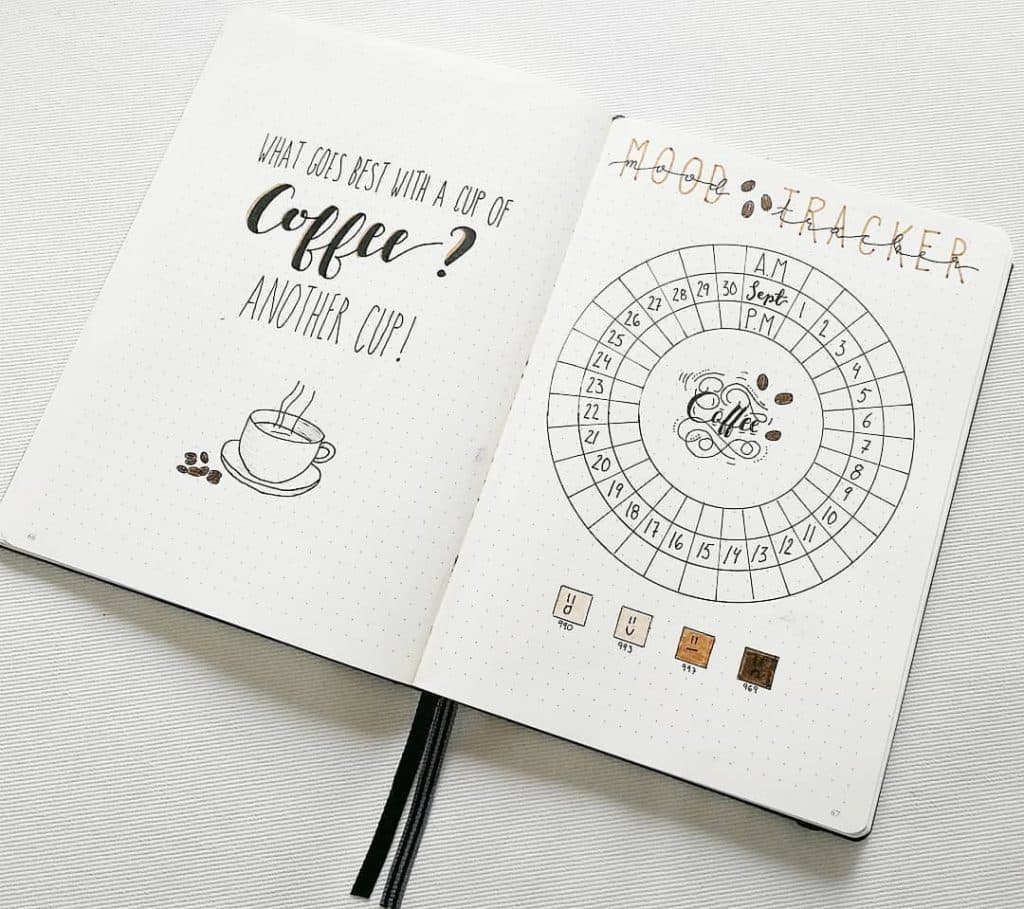
5. Circle mood tracker
Here’s another minimalist mood tracker that allows you to record two moods in a day.
You simply draw circles and format them like this. And then it’s up to you to add designs like this coffee print at the middle.
6. Mood, sleep, and work tracker
This is a great layout that incorporates how you feel about your general mood and the hours you spend sleeping and working. Just assign different colors for each one to track your graph easily.
You can tell at a glance how everything is doing. It’s an efficient use of space on your bullet journal too!
You can reduce the number of moods to just five to make it simpler. But if you’re good with this then that’s just fine.

7. Anxiety Tracker
If you are tracking your anxiety in particular, this is the mood tracker for you. It will help you track the days you get anxiety attacks.
At a glance, you can easily tell how often the attacks come. This will help you better identify the triggers by recalling what has happened during that day. It’s best when you pair it with a daily journal or diary.

8. Anxiety by the Hour
Here’s another tracker specifically for when you have anxiety. This one allows you to have a deeper look into your anxiety levels as you get to track them by the hour.
Rate your anxiety level on a scale of 1 to 5 and write notes on anything significant that you think triggered it.

9. Plain mood tracker
This minimalist mood tracker is so simple that anyone with a busy schedule can pull it off!
There are markers for Mondays to let you know the start of the week. Simply fill in the space with the corresponding mood for the day.
You don’t even have to use colors if you do not want a colorful page. Just use a pattern key that you can do with your pen.

10. Year in pixels
If you don’t mind having a bit of color in your mood tracker, you should give this layout a try. This is actually quite popular for BuJo enthusiasts because of its simplicity.
As you see, a color is assigned for every mood. By the end of the year, you will have a box filled with colors.
What I like about year in pixels is that you make just one mood tracker and that will do for the entire year. No need to make one every month.

For more tips on creating a year in pixels mood tracker, read our related post on it – A Year in Pixels: Simple Mood Tracker for the Whole Year
11. Stress, motivation, and energy
This line graph lets you rate your stress, motivation, and energy levels on a scale of 1 to 5 with 1 as the lowest and 5 as the highest point. This way, you become more specific about how you are feeling in these areas.
The lines do not intersect with each other with this kind of layout so you can easily assess how you have been doing at the end of the month.

12. Memories and mood tracker
This minimalist mood tracker lets you write about your day and track how you feel about it.
Each line starts with the date. Then highlight the space with the color corresponding to your mood. And finally, write a little detail about what you did or what set out such mood.

13. Constellation
This mood tracker is a line graph but instead of using dots, you use stars.
The end result of the mood tracker makes it look like you are forming your own constellation on your bullet journal page – minimalist and creative!

14. Music sheet
This is a totally simple and unique mood tracker. Each note represents a day in the month. The higher the note, the better the day.
This is great when you are a music lover looking for a minimalist mood tracker.

15. Mood and weather tracker
This is a mood tracker that lets you track both your mood and the weather at the same time. The pink pen is for tracking the mood and the black pen is for tracking the weather.
Simply connect the dots and you get a line graph.

16. Individual Circles
This mood tracker is very simple and easy to make. Draw circles to represent a day in the month, create a color or pattern key, and fill in the circles according to your mood.
You can use coins to make perfect circles.

17. Floral grid
This mood tracker uses a grid layout and the space in the middle is used for a simple floral design. You can replace this with any design you want.
Fill each square in the grid with the pattern that represents your mood for that day.

18. Moon mood tracker
Using only black and silver colors, this mood tracker is just great for minimalists. It’s a great layout to try if you want to maintain an all-black and white bullet journal.
Each phase of the moon represents a mood and simply fill in the little circle with your mood for the day.

19. Flower mood tracker
This minimalist mood tracker makes use of flowers and colors in a simple layout and design. The higher the flower, the better the mood.
This is a great mood tracker layout when you also like to doodle simple flowers from time to time.

20. Hanging lights
This is a simple mood tracker that you can easily recreate in your own bullet journal. Each hanging light represents a day in a month. Like most mood trackers, you will be using colors to indicate the mood you felt for the day.
In this case, the length of the lights is just for aesthetic reasons.

Our moods can shift like the weather.
This could be natural but when you are feeling down more than usual, you should know what is triggering it. So, by using a mood tracker, you will be able to find solutions to help you feel better inside and out.
Look for the layout that would work best for your needs and then start exploring other layouts in the following months if you feel like you want something more.
These minimalist mood tracker layouts are simple, easy to make, and quick to update, so having one shouldn’t be that hard even when you’re busy.
And yes, I’m confident that you will definitely find something that will work for you!
Minimalist Bullet Journal Mood Tracker FAQs
What is a mood tracker in a bullet journal?
A mood tracker is a simple way to record how you feel each day using colors, symbols, or small marks in your bullet journal. Over time, it helps you see patterns in your emotions.
How do you make a simple mood tracker?
To make a simple mood tracker, choose a few moods, assign colors or symbols to each one, and use a basic layout like a grid or line. The key is to keep it quick and easy so you can stay consistent.
What are the easiest mood tracker ideas for beginners?
The easiest minimalist mood tracker ideas as you have seen in this post include:
- Dot trackers
- Line trackers
- Small grids
- Circle trackers
These require little to no drawing and are perfect for beginners.
Do mood trackers actually help?
Yes, mood trackers can help you become more aware of your emotions and identify patterns over time. This can help you manage stress, understand triggers, and improve your overall well-being.
How many moods should I track?
It’s best to track 3–5 moods in a minimalist mood tracker. Keeping it simple makes it easier to stay consistent and avoid feeling overwhelmed.
Looking for more mood tracker ideas and designs? Check these out!
- Bullet Journal Mood Tracker: 15 Awesome Layouts!
- February Mood Tracker: Lovely Layouts for the Month of Love!
- 20 Fun & Exciting Mood Tracker Layouts for the Month of January
- 20 Bullet Journal Mood Tracker Designs for December
For more minimalist bullet journal layouts, check out these posts as well:
- 35 Easy & Minimalist Bullet Journal Weekly Spread Ideas for Busy SAHMs
- 15 Simple and Minimalist Bullet Journal Spreads to Try!
Has this post helped you? Take a second to PIN it!
Really a good one.
Glad you like it!