Discover how to homeschool a preschooler through play, everyday life, and meaningful family moments while preparing your child for kindergarten.

When I first started homeschooling my preschooler, I actually wasn’t so concerned about academics.
I just kept on buying him educational toys. My goal then was to keep him busy and away from screens. I wanted our days to be screen-free as much as possible because I know the dangers screentime does to children.
It’s only until recently that I have actually started thinking am I doing enough? I’m thinking now about this because my son is already approaching kindergarten age. We have in fact enrolled him already in kindergarten.
And so, the question I have is: have I done enough to prepare my son for kindergarten?
Is he ready?
As I write this post, we’re going through his first module – line tracing. And my son is kind of getting bored with it.
I can understand why. It’s because he’s already tracing letters. And most of the time now, he writes letters on a blank page, without having to trace them anymore.
So, I guess it’s a sign he’s already kindergarten ready after all.
And I’ve come to realize – I have actually done preschool homeschooling without thinking much about it. It was just part of our everyday life.
Looking back, I can see now that my son was learning even when we weren’t sitting down for a lesson.
He learned while helping around the house, listening to stories, playing with puzzles, watching parades and imitating them at home, asking endless questions about the world around him, and recently, tracing letters.
That’s when I realized that homeschooling a preschooler doesn’t have to look like school. And I’m quite relieved at this realization. Because I really don’t want our homeschool days to look like school.
Indeed, these early years are less about checking off academic milestones and more about building a strong foundation through play, conversations, everyday experiences, and time together.
So, if you too are just getting started and wondering how to homeschool a preschooler, let me walk you through the basics.
We’ll talk about what preschoolers really need to learn, whether you need a curriculum, how much time learning should take, and simple ways to make homeschooling a natural part of everyday family life.
What does it actually mean to homeschool a preschooler?
If you’re new to homeschooling, you might be wondering what homeschool preschool actually means.
The answer is simple. Homeschooling a preschooler means teaching and guiding your child at home during the preschool years.
But unlike traditional preschool, homeschooling doesn’t have to happen at a desk, follow a strict schedule, or look like a classroom.
Your preschooler will absorb more when you focus on learning through play and through everyday life.
Learning happens while reading books together, building with blocks, helping in the kitchen, playing outside, doing puzzles, listening to stories, singing songs, or asking questions about the world.
The goal of homeschooling a preschooler isn’t to rush your child into academics. Instead, it’s about building a strong foundation for future learning.
You can use a curriculum to guide you on what things you need to teach your preschooler. Or you can follow a more relaxed approach and simply learn through daily life like what we do. Most families fall somewhere in between.
But this is not about following a perfect plan. It’s creating opportunities for your child to learn, explore, play, and grow.
And if you’re worried that your homeschool preschool doesn’t look enough like school, remember what I shared earlier: I realized my son was learning long before I started thinking about lesson plans and kindergarten readiness. Much of that learning happened naturally through our everyday life together.
What should you teach a preschooler?
Let’s break this down into categories. And in each I will share with you that you should teach your preschooler and how I’ve gone through with it with my own son.
Language and Communication Skills
One of the most important skills a preschooler can develop is the ability to communicate. This includes expressing thoughts, asking questions, understanding instructions, and participating in conversations.
Your goal during the preschool years is to help your child become a confident communicator.
In simple terms, your child should be able to express what he means and understand what others are saying to him.
Simply talk with your child everyday. Involve him in your activities like your chores. You may be cooking something while he’s just there talking and asking questions like what is this green thing? What does it taste? And your kid might say he doesn’t want to eat it.
Talk to him in your normal language. Don’t baby talk him. Talk to him like you’re talking to an adult too like you. Normal conversations. And you’ll see, the kid adapts.
He will feel like he’s an important person in the family too – that he has value and his voice matters. And he will feel that what he says is important. This will encourage him to keep talking.
Honestly it kind of gets annoying at times, especially when your preschooler keeps repeating the same thing over and over.
When this happens, simply remind yourself this is how they learn. And when he talks to you, like all his attention is on you, there’s a bond being formed there between you and your child. And this is how trust is built. Your child feels that it’s safe to talk to you.
It’s important for a child to feel safe before he learns.
Early Literacy and Letter Recognition
Another important area to focus on during the preschool years is early literacy and letter recognition.
Many parents worry about whether their preschooler should already be reading. While some children do learn to read early, reading independently is not usually the main goal during preschool.
Instead, the goal is to build the foundation that will make reading easier later on.
This foundation can include things like:
- Listening to stories
- Learning new words
- Understanding that books have meaning
- Recognizing letters
- Becoming familiar with sounds and rhymes
- Developing an interest in books and reading
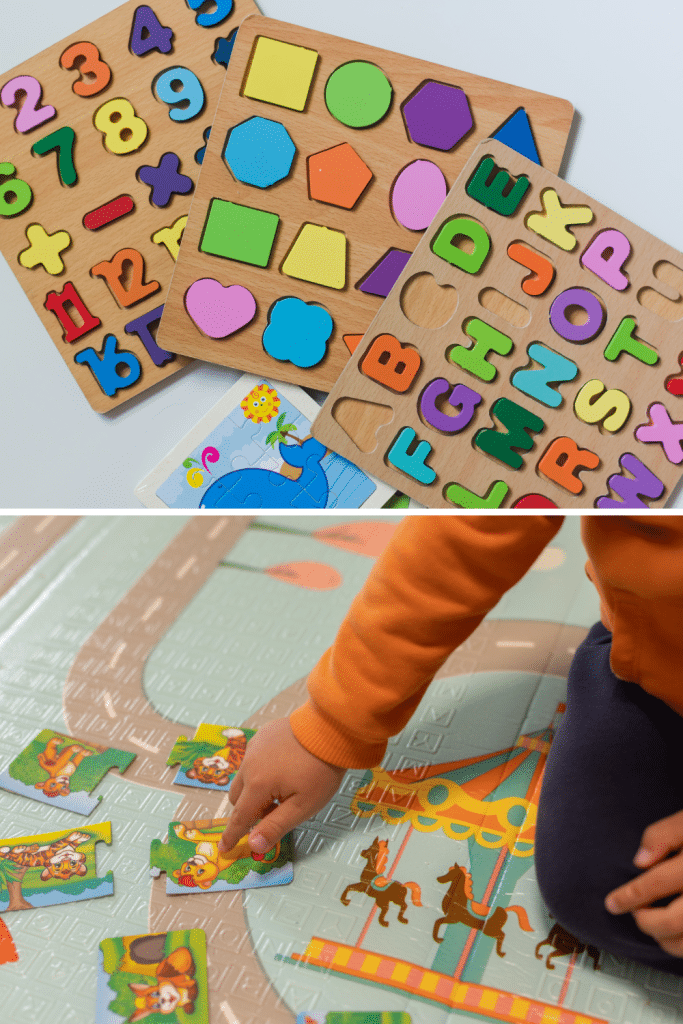
Every child develops these skills differently. For my son, this started with puzzles. I bought him alphabet puzzles. And he liked matching the letters to their word partner.
His aunt also bought him animal puzzles. He liked matching them too.
And we had games using these puzzles until he just memorized them. At three years old he already recognizes letters because of these puzzles.
Then we also read books together. Actually, I would read and he would listen and ask questions.
Then we talked about the pictures. Sometimes he would point to words and ask what they were. But he was actually more interested in the story itself.
My son was naturally drawn to puzzles, though, so we spent more time with those.
But as his curiosity grew, I began introducing letters more intentionally.
Later on, I bought him letters that stick on fridge. This is when I started introducing letter sounds to him.
I’d take a letter on the fridge, like letter A for example. And I ask him what letter is this. He says A. Then I’d tell him. This reads as /a/ like in apple. And he would repeat that.
Children often enjoy recognizing the letters that are personally meaningful to them.
One of the easiest ways to introduce letters naturally is to start with the letters in your child’s name. Actually this is how my son was encouraged to start writing – so he can be able to write his name.
You can also point out letters on signs, food packaging, books, toys, and other things you encounter throughout the day.
What matters most here is not how quickly your child learns the alphabet. Preschool stage is about helping him become familiar with letters and creating positive experiences around books and reading.
Remember, preschool is about building a foundation. If your child is becoming curious about letters, enjoys being read to, and is beginning to recognize some of the alphabet, he’s already making progress.
Basic Math
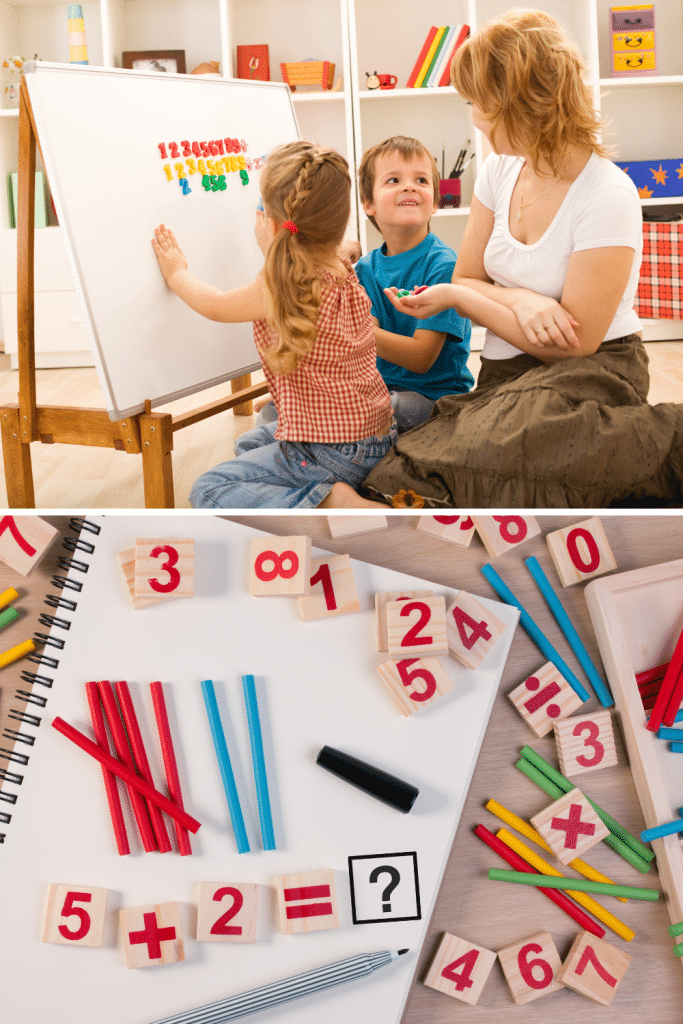
Another area you can focus on during the preschool years is basic math skills.
Just like reading, preschool math doesn’t have to involve formal lessons or workbooks.
The goal at this stage is simply to help your child become familiar with numbers and basic math concepts through everyday life.
This can include things like:
- Counting objects
- Recognizing numbers
- Sorting and matching
- Identifying shapes
- Understanding concepts like more and less
- Recognizing patterns
For my son, math started during play.
We bought him a shape sorter. And it’s how he learned shapes and colors.
Then we counted his fingers. His Dad made it like a game. And my son simply loved that time with his father.
By this time, he already had the alphabet puzzles and the animal puzzles. And I thought of buying him a number puzzle too because I saw how he loved those puzzles. So, I did. And he learned counting from 1 to 20.
And we just counted things around the house from time to time. We counted his toys, the oranges on the table, and even ducklings when we went outside.
He didn’t even realize he was already learning math.
As he became more comfortable with numbers, I started pointing them out in everyday places. We looked for numbers on calendars, clocks, food packaging and promotional flyers .
One thing I’ve learned is that preschoolers don’t need long math lessons.
A few minutes here and there throughout the day can be enough. Young children learn best when math feels like a natural part of life instead of a separate subject.
The goal isn’t to see how high your child can count or how quickly he can solve problems.
The goal is to help him become comfortable with numbers and begin understanding how they are used in everyday life.
So, if your preschooler is learning to count, recognizing some numbers, and showing interest in these, then that’s progress.
Fine Motor Skills
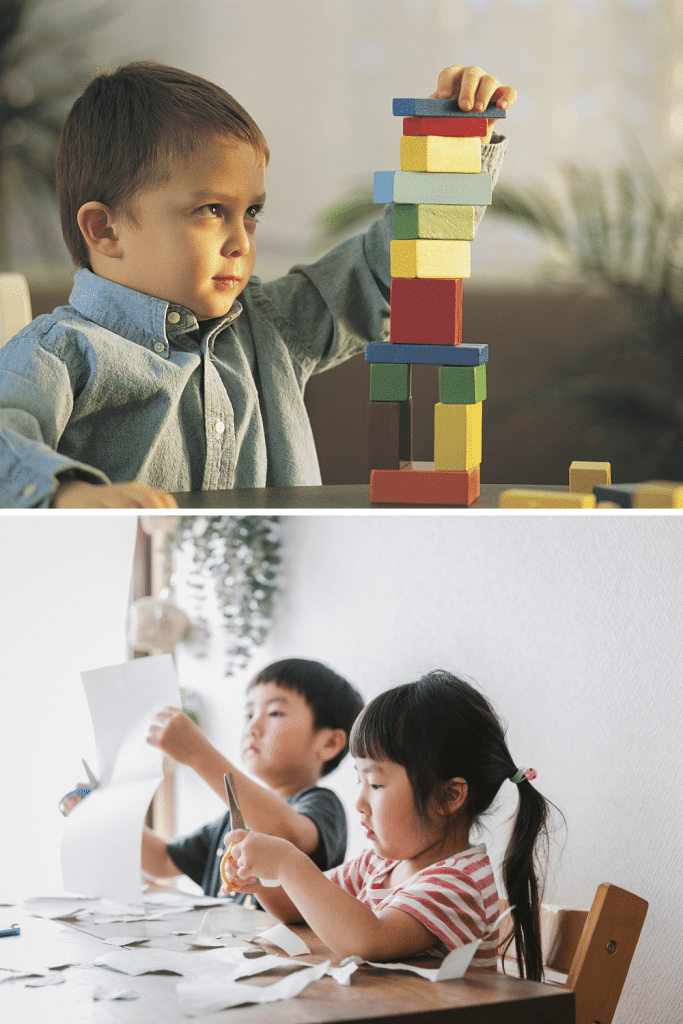
Another important area to focus on during the preschool years is fine motor skills.
Fine motor skills are the small movements children make using the muscles in their hands and fingers.
These skills are important because they help children perform everyday tasks such as holding a pencil, using scissors, buttoning clothes, turning pages in a book, and feeding themselves.
We may think handwriting starts when a child picks up a pencil.
I thought like this before too.
But the fact is, long before that happens, children are already developing the hand strength and coordination they need for writing.
For my son, fine motor practice happened through play again.
He spent time working on puzzles, stacking blocks, turning pages in books, and playing with small toys. Sometimes he would help with simple tasks around the house that required him to use his hands.
At that time, I didn’t think much about it. I simply saw him playing. And for me as well, it was just playing. Except that well, I was happy because I knew he was already learning because his toys were mostly educational ones.
And when he helped me around the house, I kind of imagined him becoming a real help when he grew up. So, it’s another thing that really made me happy.
Looking back, I realize he was already strengthening the very skills he would later need for tracing and writing.
So, when we eventually introduced letter tracing, he wasn’t starting from zero. He had already spent years using his hands to build, sort, match, pick up, and manipulate different objects.
That’s why I don’t believe preschoolers need to spend hours practicing handwriting.
Before children can write comfortably, they first need opportunities to strengthen their hands and improve their coordination.
Simple activities like puzzles, building blocks, drawing, coloring, play dough, sorting objects, and helping with everyday tasks can all contribute to fine motor development.
The goal isn’t perfect pencil control.
The goal is helping your child develop the strength and confidence to use his hands independently.
And just like every other area of preschool learning, this often happens little by little through everyday life.
Social and Life Skills
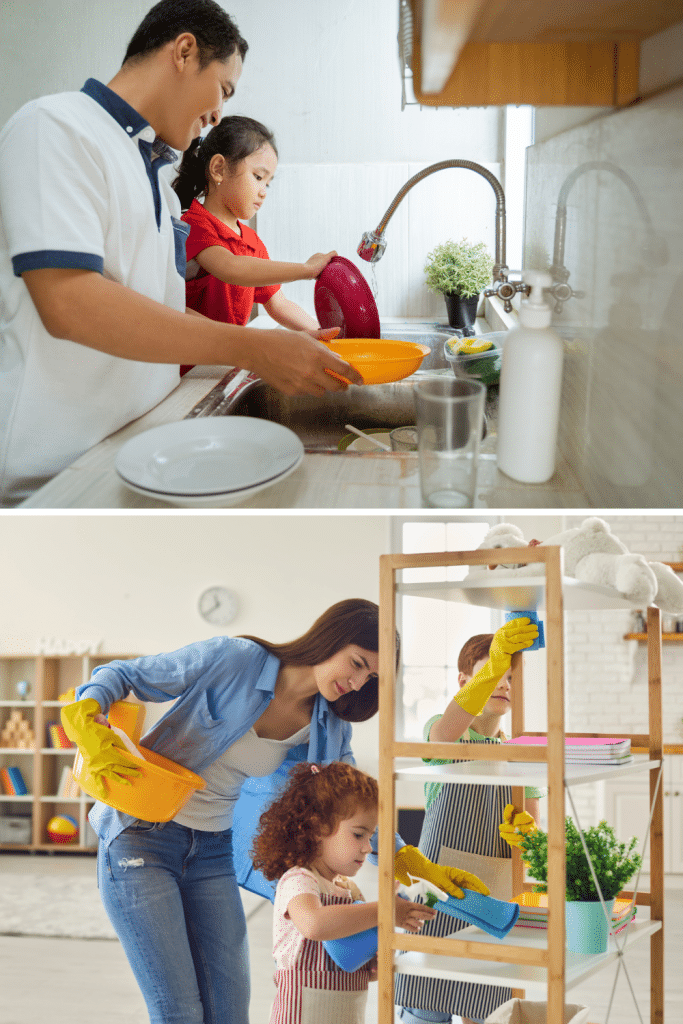
Another important area to focus on during the preschool years is social and life skills.
When we think about preschool, we often think about learning letters, numbers, and colors. While those things are important, I believe social and life skills are just as valuable.
After all, our children will use these skills every day for the rest of their lives.
Social skills help children learn how to interact with others. This includes things like taking turns, listening when someone is speaking, expressing their feelings, showing kindness, and learning to respect other people.
Life skills, on the other hand, are the practical skills children use in everyday life.
These can include:
- Cleaning up after themselves
- Putting away toys
- Helping with simple chores
- Following instructions
- Getting dressed
- Washing hands
- Taking care of their belongings
For my son, many of these skills were learned simply by being involved in our daily routines.
When I was doing chores, I would often invite him to help.
Actually, his help wasn’t really helpful at all. In fact, it often made the task take longer.
But that wasn’t really the point. When I was asking him to help – like wipe down the table, or sweep the floor, I knew it wasn’t really about the chore. And I’ve also anticipated it already that tasks would take longer.
It’s not about finishing things quickly or him becoming a real help for me.
The goal was simply to teach him that he is a valuable member of our family and that he can contribute in his own way.
Over time, he learned how to put things away, help with simple tasks, and take responsibility for some of his belongings.
It’s not perfect, though.
If you’re thinking he’s automatically keeping his toys organized without being told, you’re completely wrong.
It still looks like a tornado went through our home many times. But when I ask him to put away his toys, he usually helps and does his best to clean up. And for me this is progress.
He also learned how to interact with people through everyday conversations with family members, relatives, neighbors, and other children.
These lessons didn’t happen during a formal class.
They happened during ordinary moments.
And I think that’s one of the greatest advantages of homeschooling a preschooler. Learning doesn’t have to be separated from real life. And learning isn’t confined in a classroom.
In many ways, real life becomes the classroom.
The goal isn’t to raise a child who can simply recite facts.
It is to raise a child who is capable, responsible, kind, and confident as he grows.
Character Development
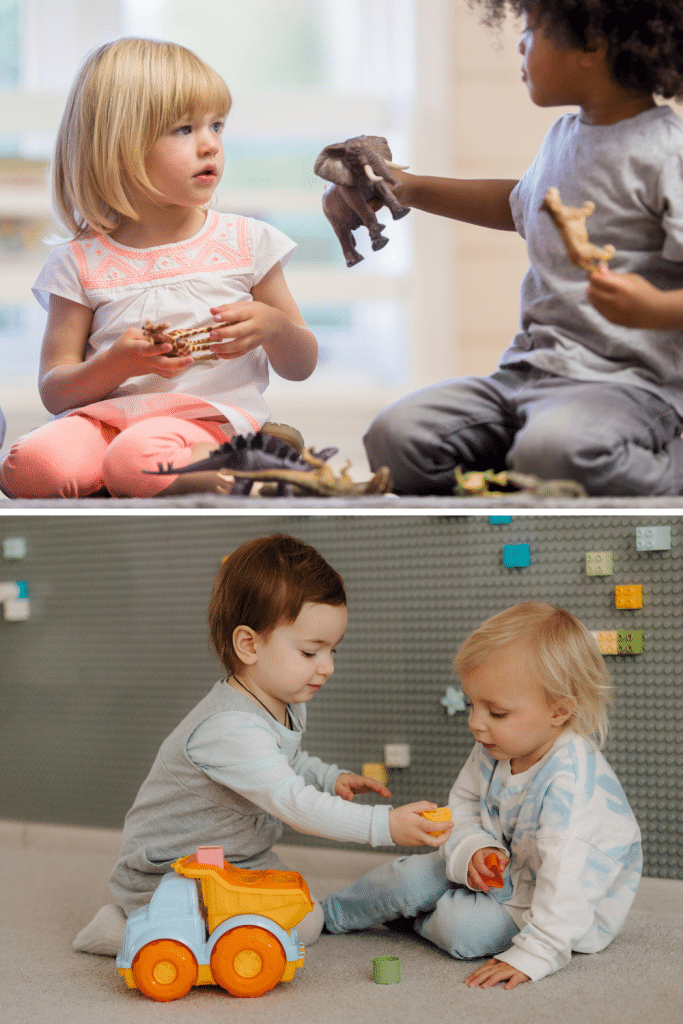
Another area that is often overlooked during the preschool years is character development.
When we talk about education, we usually focus on academic skills. We want to know if a child can read, write, count, or recognize letters.
But as parents, we’re not just teaching our children information.
We’re also helping shape the kind of people they will become.
Character development includes qualities such as:
- Kindness
- Honesty
- Patience
- Gratitude
- Responsibility
- Respect
- Perseverance
These are not skills that can be learned from a worksheet.
They are learned through everyday life.
For my son, character lessons often happen in ordinary moments like learning to share toys with his younger brother.
He also learns to wait for his turn. Or help clean up a mess that he made himself.
I also remind him to say “thank you” when someone helps him, or when he receives a gift.
These moments may seem small, but they add up over time.
Character development is not usually taught in a single lesson. It happens through repeated practice and gentle guidance.
And at times, it’s a struggle. But as parents we need to be reminded that this is important. And when we homeschool, we actually have countless opportunities to teach character throughout the day.
For example, we show it to our kids when we model kindness to others or when we apologize after making a mistake.
We teach it when we encourage them to keep trying even when something feels difficult.
One thing I’ve realized through homeschooling is that character development doesn’t have to be a separate subject.
It can be woven into everyday life.
In fact, some of the most important lessons my son is learning right now have nothing to do with letters or numbers.
They have to do with learning how to treat people, how to handle challenges, and how to become a responsible member of our family.
Because at the end of the day, academic skills do matter.
But character matters just as much. And in fact, as children grow up, it’s easier to teach academics when they have the right character in place. I often remind myself of this.
Bible Stories
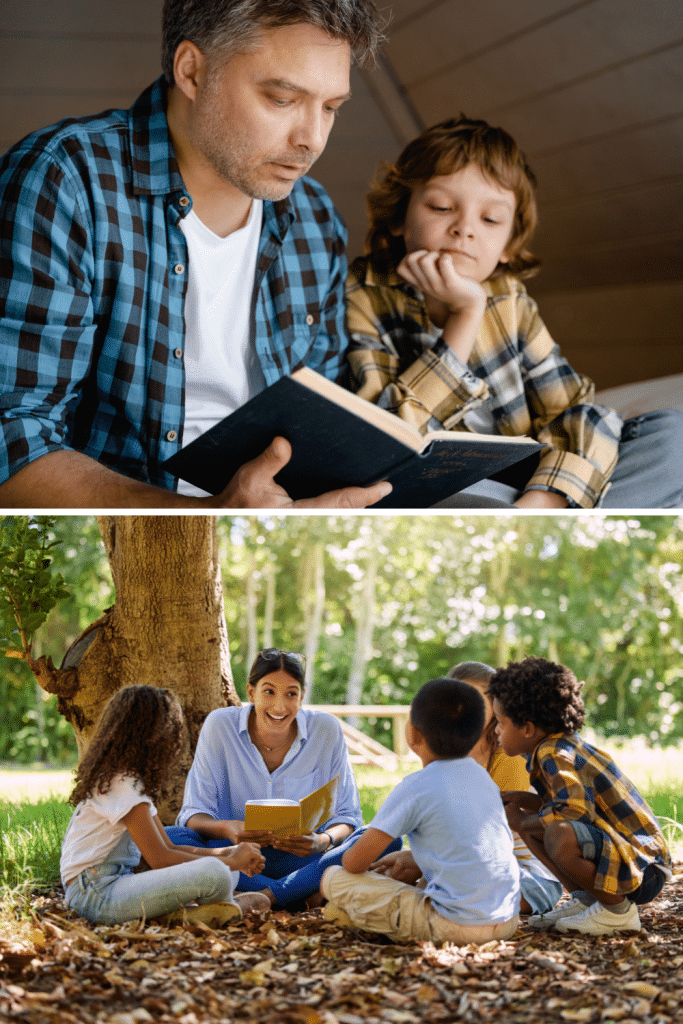
For our family, another important part of preschool homeschool is learning about God.
While we spend time learning letters, numbers, and other skills, I also want my children to know who God is and how much He loves them.
These early years are a wonderful time to introduce children to Bible stories because young children are naturally curious and eager to learn.
Some of the first Bible stories my son became familiar with were Creation, Noah’s Ark, David and Goliath, Jonah and the Big Fish, Daniel and the Lions’ Den, the story of Jesus’ miracle at the wedding at Cana, and Jesus’ death and resurrection.
We usually keep things simple.
Most of the time, we talk about God during everyday moments. For example, I teach my son to value trees because they give us shade and fruits. And I’d ask him who made the trees. And he would say God of course!
I’d usually follow it up with what day did He make them? Sometimes he remembers the answer. Sometimes not. And that’s okay.
Preschoolers don’t need long Bible lessons any more than they need long math or alphabet lessons.
A simple story, a short conversation, or a meaningful question can often be enough.
More importantly, I want my children to see that faith is not something that only happens during Bible lesson time.
It’s something that becomes part of everyday life – like when we pray to God to thank Him for the day or when we’re worried about a coming storm.
As parents, we are often our children’s first example of what faith looks like in everyday life.
That’s why I believe teaching our children about God involves more than reading Bible stories. It also involves living out our faith in front of them.
The goal isn’t simply for my children to know Bible stories.
The goal is for them to know the God behind those stories. And that they can trust that God with their worries.
Do you need a preschool curriculum?
One of the first questions many parents ask when they decide to homeschool a preschooler is whether they need a curriculum.
The short answer is no.
A curriculum can certainly be helpful, but it is not required.
Before I started buying educational toys, I had to ask myself, what does my son really need to learn?
And I listed the basics in my head.
Number one is the Bible and God. Then he needs to learn how to read, write and count. And he needs to learn too that family is the second most important after God – relationships actually. And then of course he needs to learn chores.
This kind of became my own kind of self-made curriculum.
So, I bought educational toys based on these and just tagged him along with me around the house every day. That’s it. That’s the curriculum that I had so far.
I wasn’t really thinking about lesson plans or academic goals. Sometimes I would search online and ask how do you teach creation to a preschooler?
Many ideas would come up. But my son loved puzzles. So, I just started with that. I bought him a Creation puzzle.
Looking back, however, I can see that learning was already happening.
My son was developing language skills through conversations, learning letters through puzzles, practicing fine motor skills through play, building life skills by helping around the house and learning about God through puzzles and stories.
This is why I believe parents can successfully homeschool a preschooler without a curriculum.
Many preschool skills can be taught naturally through everyday life.

That said, there are benefits to using a curriculum as well, especially when you’re someone who needs some kind of structure.
A good curriculum can provide that. It can help parents feel more confident about what to teach.
It can also make planning easier, especially when you are new to homeschooling and aren’t sure where to begin.
Some parents enjoy having lessons laid out for them. Others prefer a more relaxed approach and simply use a curriculum as a guide. I lean more on the second.
Neither approach is wrong.
So, if you’re considering buying a preschool curriculum, remember that your child does not need the most expensive or comprehensive program available.
Instead, ask yourself a few questions:
- Does this fit my child’s current stage of development?
- Does it match our family’s homeschooling style?
- Will my child actually enjoy it?
- Will I realistically use it?
It’s easy to feel pressured into buying curriculum after curriculum, especially when you’re new to homeschooling. Yes, I kind of felt this pressure too lately as my son approaches kindergarten stage.
But preschool doesn’t have to be complicated.
Books, puzzles, conversations, outdoor play, simple activities, and everyday life can already provide many learning opportunities.
A curriculum can be a useful tool.
But it is only one tool.
And what matters most is not the curriculum itself, but the time, attention, and guidance you give your child each day.
How many hours a day should a preschooler learn?
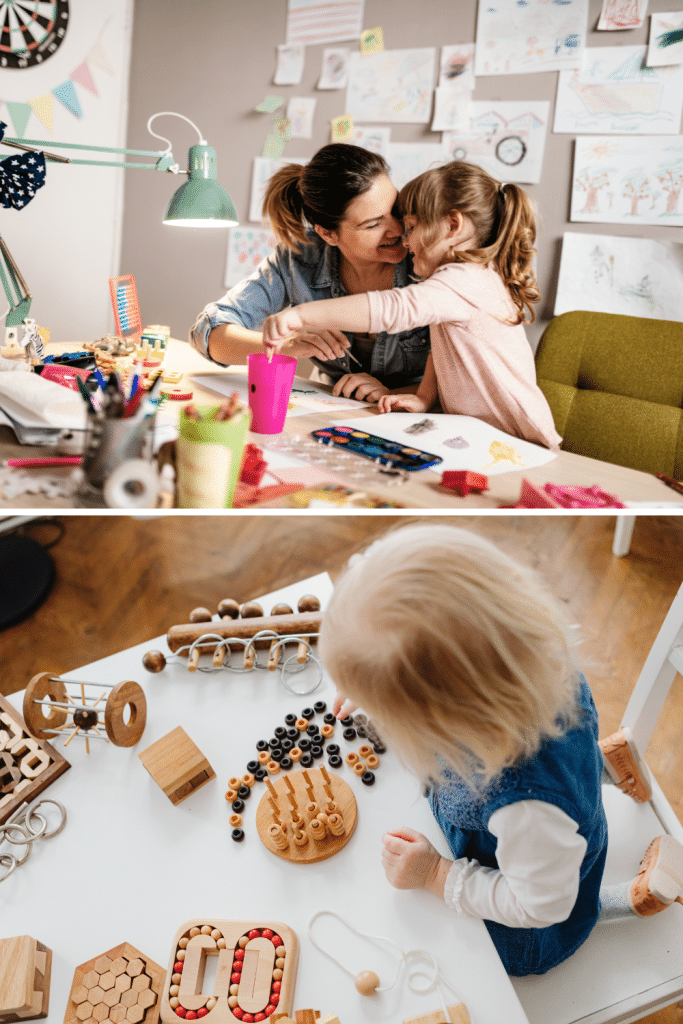
To be honest, this wasn’t something I thought much about when I first started homeschooling my son.
It wasn’t until he was approaching kindergarten that I began wondering if we were spending enough time learning each day.
The short answer is this:
Probably not as many hours as you think.
Preschoolers naturally have short attention spans.
While every child is different, most young children can only focus on one activity for a short period before wanting to move on to something else. And that’s perfectly normal.
I’ve seen this with my own son.
There are days when he happily works on a puzzle for quite a while. Other days, he traces a few letters and then says he’s done.
Sometimes he wants to listen to several stories in one sitting, and sometimes he’d rather run around outside pretending to be on a parade.
Over time, I’ve learned not to force it.
I’ve found that when he’s interested, learning happens almost effortlessly. But when he’s tired or simply not in the mood, trying to push through usually doesn’t end well for either of us.
That’s one reason I believe short lessons often work best during the preschool years.
A preschooler doesn’t need to spend hours sitting at a table doing worksheets or other schoolwork.
In fact, trying to make preschool look like a full school day can sometimes take away the joy of learning.
A ten-minute tracing activity.
Or a puzzle after breakfast.
A story before nap time.
Counting oranges while putting away groceries.
Talking about chicken and ducks while taking a walk.
These may seem like small moments, but they all contribute to your child’s learning.
And that’s something I’ve come to appreciate as we’ve continued our homeschool journey.
Learning doesn’t stop when the “lesson” ends.
It continues while your child helps you bake cupcakes, folds clothes, builds a tower with blocks, or watches ducklings swimming in a pond.
Some of the biggest learning moments don’t happen during what we would normally call school.
They happen while simply living life together.
So instead of asking, “How many hours did we do school today?” I now ask myself a different question:
Did my son have opportunities to learn today?
If the answer is yes, then I know we’ve made progress.
Because preschool homeschooling isn’t about filling a certain number of hours.
It’s about creating a home where learning naturally becomes part of everyday life. That’s what I’ve continuously strived for.
What Does a Typical Homeschool Preschool Day Look Like?
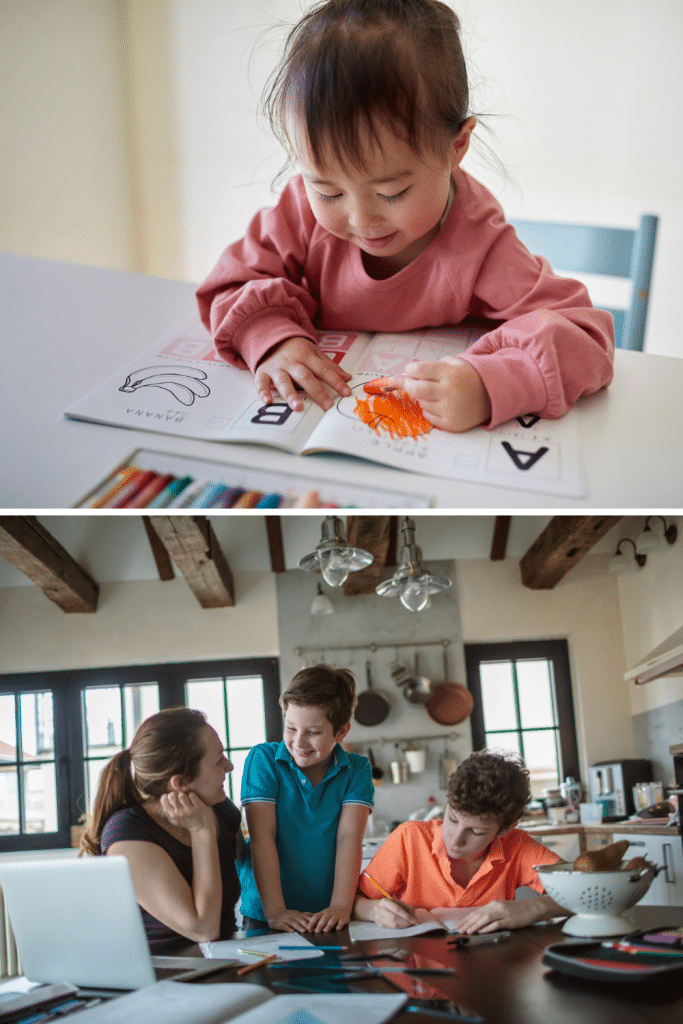
One of the questions I often see parents ask is what a typical homeschool preschool day should look like.
The truth is, there’s no single schedule that works for every family.
Some families enjoy having a structured routine with set times for each activity. Others prefer a more relaxed approach, letting learning happen naturally throughout the day.
We lean more on the second because I personally prefer having a relaxed approach. We can freely explore what works best for our family. This also allows me to take my child alongside me as I do about things at home.
Like when I’m sweeping the floor, I’d also let him hold a small broom and he would “help” me.
So, we have a general rhythm, but we don’t always follow the exact same schedule. And honestly, I’ve come to appreciate that flexibility.
Most mornings begin with breakfast. And we talk during breakfast. There’s already learning there actually.
Then there are also mornings when my son prefers playing with his little brother first before breakfast. That’s just fine.
Throughout the day, learning continues in ordinary ways.
We count objects around the house.
We talk while working on a puzzle or when I read to him.
He also helps put away toys, fold clothes, or wipe the table.
And then he likes playing with water. So, if it’s sunny, I let him wash clothes with me outside. And we talk during bath time too.
When we go outside, we also talk about the things we see – trees, birds, ducks, chickens, insects, clouds, and whatever else catches his attention.
Some days we accomplish more than others. But some days don’t go according to plan at all.
And I’ve learned that it’s okay.
One thing homeschooling has taught me is that preschool doesn’t have to fit neatly into a timetable.
Children are learning all the time.
They learn while helping, or when they’re exploring.
They also learn while pretending or when they’re asking questions.
And they learn through the conversations we have together every day.
Looking back, I don’t think the most valuable part of our homeschool has been the worksheets or the educational toys.
It’s been the time we’ve spent together.
Those ordinary moments have become some of our greatest learning moments.
Our homeschool wasn’t built around a perfect schedule. It was built around the life we were already living together.
So, if you’re wondering whether your homeschool day looks “normal,” remember this:
A successful preschool homeschool day isn’t measured by how many lessons you complete.
It’s measured by whether your child had opportunities to learn, play, explore, and spend meaningful time with you.
Because during the preschool years, those things matter more than a perfectly planned schedule.
Learning Through Play Matters More Than You Think
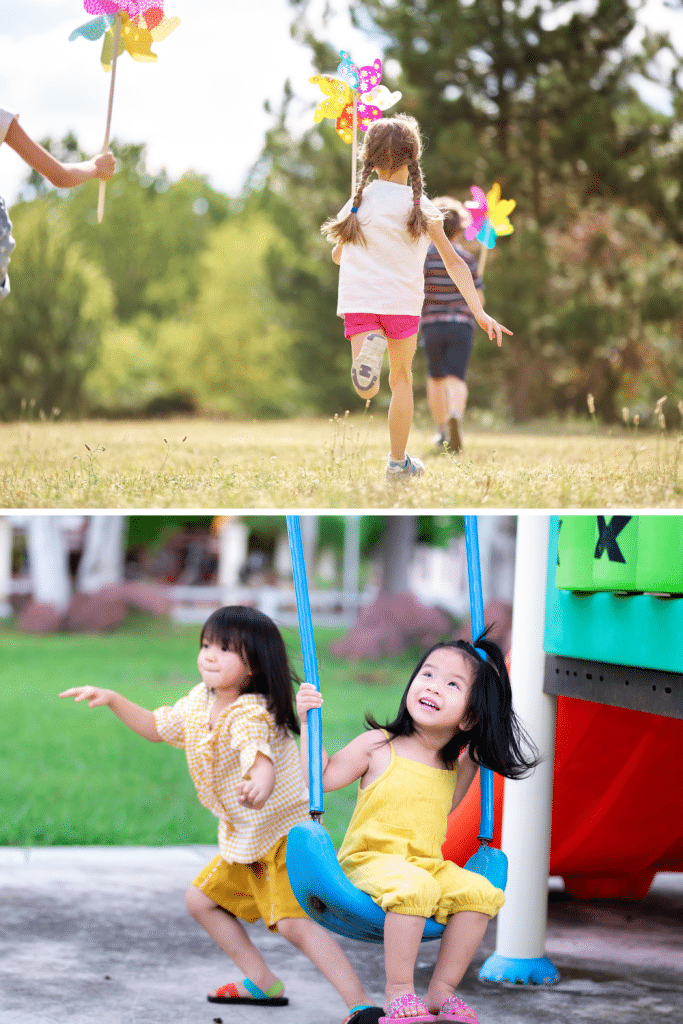
When most people think about learning, they picture a child sitting at a table with a workbook, a pencil, and a teacher giving instructions.
But preschoolers learn differently.
For young children, play is one of the most natural ways they discover and understand the world around them.
In fact, when I look back at our homeschool journey, many of my son’s biggest learning moments happened while he was simply playing.
He learned colors by simply coloring with me on a cardboard box.
He learned letters through alphabet puzzles, numbers through number puzzles, and shapes through shape sorters.
One of the toys he enjoyed most was a farm puzzle, which encouraged matching, conversation, and imaginative play.
Then he strengthened his hands by turning puzzle pieces, building with blocks, drumming on boxes and containers, and simply playing with his other toys.
He learned to communicate by asking endless questions, talking with us about everyday things and by pretending to be in a parade where he marched while drumming.
At these times, I simply thought he was having fun.
Looking back now, I realize he was learning all along.
That’s one reason I’ve stopped feeling guilty when my son spends a large part of the day playing.
Play isn’t taking time away from learning.
For a preschooler, play is learning.
Of course, this doesn’t mean every toy automatically becomes educational.
So yes, I try to be intentional about the toys and activities we bring into our home.
I look for things that encourage creativity, problem-solving, imagination, movement, and conversation rather than keeping him entertained passively.
But I’ve also learned that children don’t always need elaborate activities.
Sometimes a few blocks, a puzzle, a cardboard box, or a walk outside can lead to an afternoon full of learning.
As parents, we don’t always have to direct every moment.
Sometimes our role is simply to observe, answer questions, join in the fun, and create an environment where curiosity can grow. Then we let our child be.
Because during the preschool years, children don’t just learn through lessons.
They learn through play.
And often, they don’t even realize they’re learning at all.
Common Homeschool Preschool Mistakes to Avoid
When we start homeschooling our preschoolers, most of us have the same goal:
We want to give our children the best foundation we can.
We want them to learn and be ready.
And because we care so much, it is easy to put pressure on ourselves and our children without realizing it.
Looking back on our homeschool journey, there are a few things I’ve learned to be mindful of during the preschool years.
Expecting Preschool to Look Like School
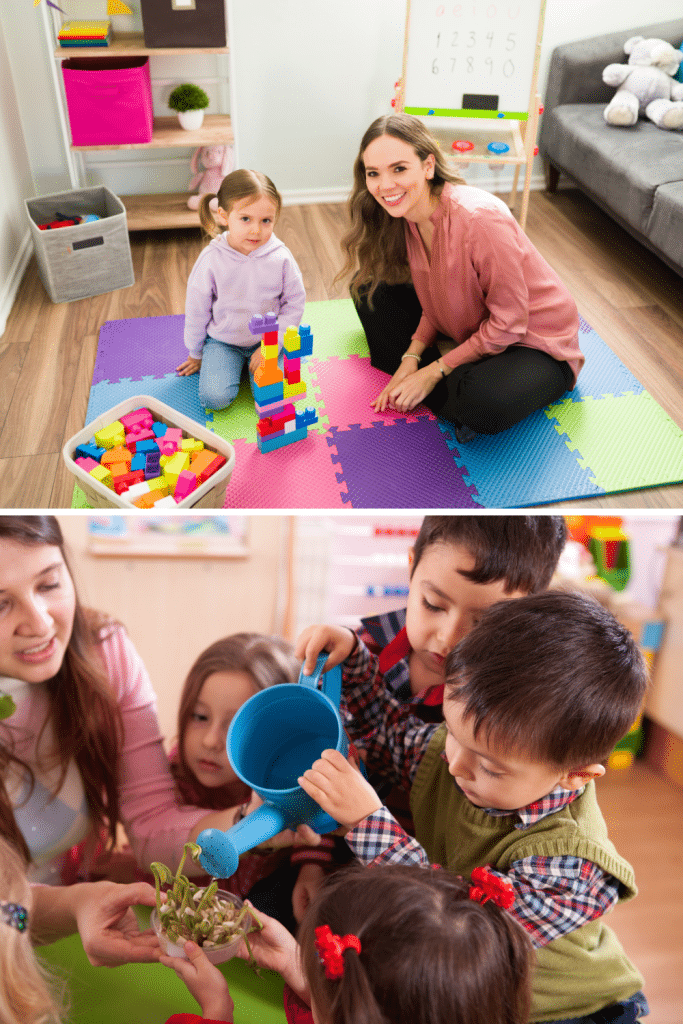
One of the biggest mistakes parents can make is trying to recreate a traditional classroom at home.
When we hear the word “homeschool,” many of us immediately imagine desks, textbooks, lessons, and a strict schedule.
But preschoolers learn differently.
They need movement, play, conversations and opportunities to explore.
Homeschool preschool does not need to look like a classroom because your home is not a classroom.
Your child can learn while cooking with you, helping with chores, asking questions, playing outside, and exploring the world around them.
Focusing Too Much on Academics
It is easy to become focused on whether our child knows enough letters, numbers, or words.
But preschool is not only about academic skills.
It is also about building communication skills, confidence, character, and curiosity.
A child who knows the alphabet but is afraid to ask questions still has room to grow.
A child who can count but struggles to communicate his needs still needs support.
Academic skills matter, but they are only one part of the foundation.
Comparing Your Child to Others
Children develop at their own pace.
Some recognize letters and start reading early.
Others may not be as interested in reading until later.
Some children love worksheets.
Others learn best through movement and play.
It can be tempting to look at what another child is doing and wonder if your child is behind.
But your child is not another child.
The goal of homeschooling is not to make every child reach milestones at the exact same time.
The goal is to guide your child from where he is.
Buying Too Many Resources
This is one many homeschooling parents can relate to.
When we want to help our children learn, it is easy to think we need more.
More worksheets, toys, books, curriculum.
But children do not need endless resources.
They need meaningful interactions.
A simple puzzle, a conversation, a book, a walk outside, or helping with everyday tasks can already provide valuable learning opportunities.
Resources are helpful tools, but they are not what makes homeschooling successful.
Forgetting to Enjoy the Journey
Perhaps the biggest mistake we can make is becoming so focused on preparing our children for the future that we forget to enjoy who they are right now.
These are the years when they ask endless questions, get excited about small discoveries, and want to be involved in everything we do.
Honestly, it does get annoying, having to repeat things over and over again. When I feel annoyed with my son, I remind myself that this is how a preschooler learns. And preschool years only happen once.
Of course, we want to prepare them for kindergarten.
But we also want to enjoy these precious moments with them.
Because at the end of the day, homeschooling a preschooler is not just about teaching our children.
It is about building a relationship with them while they learn and grow. And I think that is the most important thing we can build during these years.
What You Really Need to Homeschool a Preschooler
If you’ve made it this far, you may have noticed something.
Throughout this article, I haven’t talked much about expensive curriculum, fancy learning spaces, or buying every educational toy you can find.
That’s because I don’t believe those things are what make a successful preschool homeschool.
So, what do you really need?
A Willing Parent
More than anything else, your preschooler needs a parent who is willing to spend time with them.
You don’t have to know everything or be a certified teacher.
You simply need to be willing to learn alongside your child, answer questions, and encourage his curiosity.
Time Together
Preschoolers learn best through relationships.
Reading books together, having conversations, working on puzzles, going for walks, helping with chores, and simply spending time together all become opportunities for learning.
Sometimes your greatest teaching happens when you’re not trying to teach at all.
A Few Simple Learning Resources
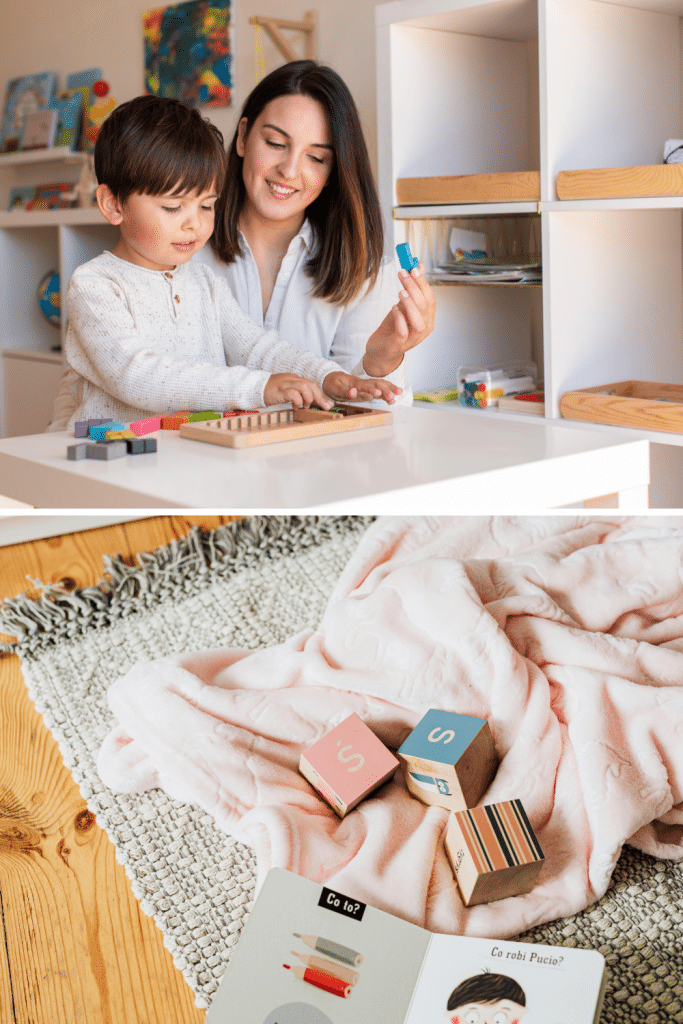
You don’t need an entire room filled with educational materials.
A few good books.
Some puzzles.
Blocks.
Crayons and paper.
Perhaps a shape sorter or alphabet letters.
Simple resources like these can provide countless learning opportunities.
And honestly, everyday household items often become some of the best learning tools.
We’ve used cardboard boxes, kitchen utensils, containers, and whatever else sparked my son’s curiosity.
A Flexible Mindset
Not every homeschool day will go according to plan.
Some days your child will be excited to learn.
Other days, they’ll only want to play.
Some lessons will last fifteen minutes.
Others might last only five.
That’s okay.
Homeschooling a preschooler isn’t about following a perfect schedule.
It’s about following your child as he grows and learns.
Patience and Grace
Perhaps the most important thing you’ll need is patience.
Not only with your child, but with yourself.
There will be days when lessons don’t go as planned.
Days when your child loses interest and you wonder if you’re doing enough or you’re doing something wrong.
I’ve had those thoughts too.
But I’ve learned that homeschooling is a journey.
You don’t have to get everything right from the very beginning.
Your child doesn’t need a perfect homeschool.
He needs a parent who loves him, spends time with him, and is willing to guide him one day at a time.
Frequently Asked Questions
At what age should I start homeschooling my preschooler?
There isn’t one “right” age to begin.
Many families naturally start during the toddler and preschool years by reading books together, talking about the world around them, playing educational games, and involving their children in everyday life.
Rather than focusing on a specific age, look for your child’s curiosity and readiness to learn.
Do preschoolers need a curriculum?
Not necessarily.
Many families successfully homeschool preschool without a formal curriculum.
A curriculum can provide structure and ideas, but it isn’t required. Conversations, books, play, puzzles, everyday experiences, and time together can all become valuable learning opportunities.
How many hours should a preschooler homeschool each day?
Preschoolers don’t usually need several hours of formal lessons.
Most young children learn best through short, engaging activities spread throughout the day.
Remember that learning doesn’t stop when the lesson ends. Preschoolers continue learning while playing, helping with chores, asking questions, reading books, and exploring the world around them.
What subjects should I teach my preschooler?
A well-rounded preschool homeschool can include:
- Language and communication
- Early literacy and letter recognition
- Basic math
- Fine motor skills
- Social and life skills
- Character development
- Bible stories and faith
The goal is to build a strong foundation rather than master every subject.
Does preschool homeschooling have to look like school?
No.
One of the greatest benefits of homeschooling is the freedom to learn in ways that fit your family.
Many preschoolers learn best through conversations, play, stories, outdoor exploration, helping around the house, and everyday experiences.
What if my child doesn’t want to do a lesson?
That’s perfectly normal.
Young children have short attention spans, and there will be days when they simply aren’t interested.
Instead of forcing a long lesson, try taking a break, changing the activity, or looking for opportunities to learn through play and everyday life.
How do I know if my preschooler is ready for kindergarten?
Every child develops at a different pace, but many children are ready for kindergarten if they are gradually developing skills such as:
- Communicating their thoughts and needs
- Recognizing some letters and numbers
- Following simple instructions
- Using pencils, crayons, or scissors with increasing confidence
- Playing and interacting with others
- Becoming more independent in everyday tasks
Remember that kindergarten readiness isn’t only about academics. Confidence, curiosity, communication, and independence are just as important.
What if I feel like I’m not doing enough?
I think almost every homeschooling parent asks this question at some point.
I’ve asked it too.
But one thing I’ve learned is that preschool homeschooling isn’t about creating a perfect classroom at home.
It’s about creating opportunities for your child to learn, explore, ask questions, and spend meaningful time with you.
Your child doesn’t need a perfect homeschool.
He needs a parent who loves him and is willing to learn alongside him one day at a time.
Final Thoughts
When I first started homeschooling my preschooler, I honestly didn’t think much about whether I was doing things “the right way.”
I simply wanted to spend time with my son, keep him away from too much screen time, and fill our days with meaningful activities.
It wasn’t until he was approaching kindergarten that I began looking back on everything we’d been doing.
And that’s when I realized something.
We had been homeschooling all along!
Not because we followed a perfect curriculum, had a strict schedule, or everyday looked productive.
It was because learning had quietly become part of our everyday life.
Looking back now, I’m grateful for all the ordinary moments we shared.
The conversations during breakfast, the puzzles scattered across the floor, the walks outside, the stories we read together, the chores we did side by side.
Those moments may have seemed small at the time, but together they became the foundation of my son’s preschool education.
So, if you’re just beginning your own homeschool preschool journey, I hope this encourages you.
You don’t have to have everything figured out.
You don’t have to create a classroom at home or do everything perfectly.
Start where you are.
Learn alongside your child.
Enjoy these precious years together.
Because one day you’ll probably look back, just like I did, and realize that some of your child’s greatest learning moments happened during the ordinary days you almost overlooked.
Save This Guide for Later
Homeschooling a preschooler is a journey, and it’s normal to come back with new questions as your child grows.
Pin this guide on Pinterest so you can easily find it again whenever you need encouragement or ideas to homeschool your preschooler.
Whether you’re just getting started or simply need a reminder that learning doesn’t have to look like school, I hope this guide helps you enjoy these precious preschool years.