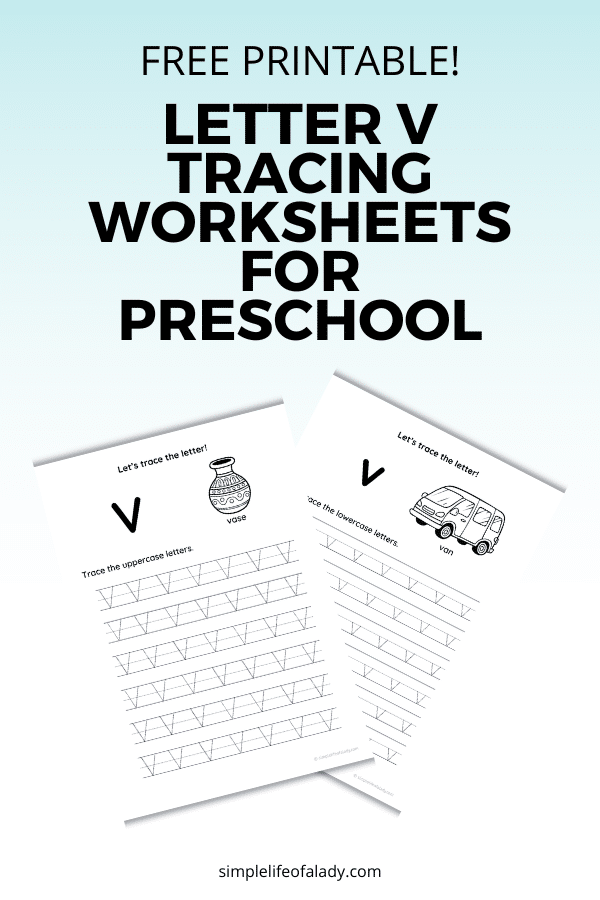
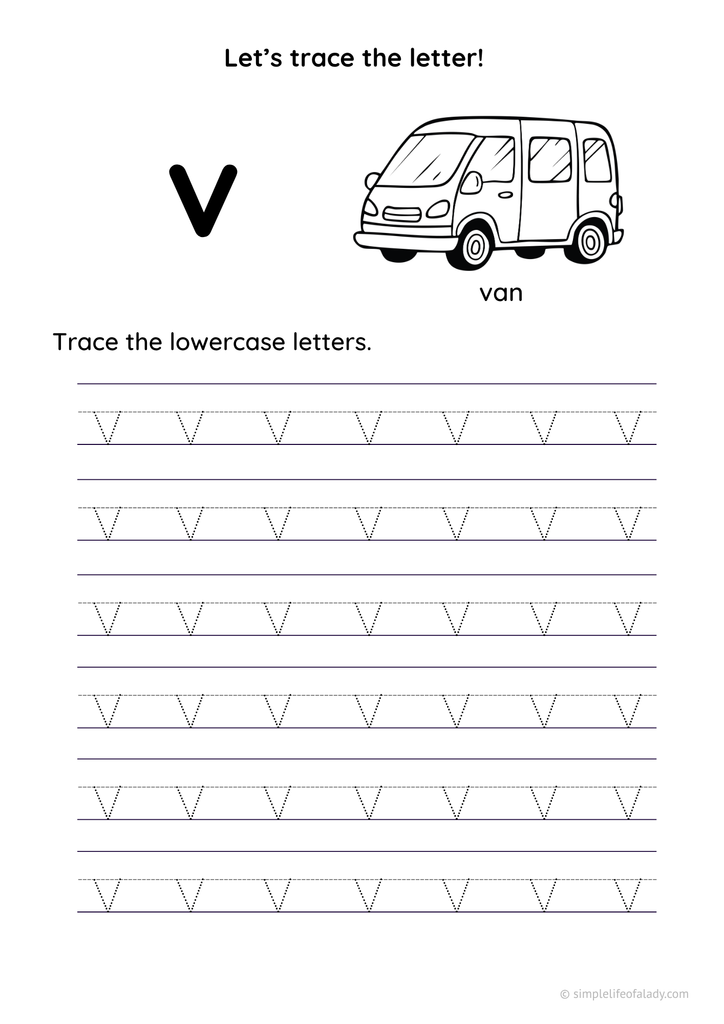
These free Letter V tracing worksheets for preschool will give your child a simple way to practice recognizing and writing the letter V while developing early handwriting skills.
It’s easy to celebrate when your children get something right.
They trace the letter perfectly, and we say, “Good job!”
But what about when they try really hard and the letter doesn’t look quite right?
Do we get frustrated? Do we let our children see that we are disappointed?
I hope not. Because that’s an important moment, too.
Preschoolers are still developing the fine motor control needed for writing. Their hands are learning how much pressure to use, how to hold a pencil, and how to guide it across the page.
So instead of focusing only on the finished letter, try noticing the effort that went into making it.
Let Your Child Practice Without Pressure
Tracing worksheets don’t need to become a test.
Your preschooler doesn’t have to complete every line perfectly or finish the whole page in one sitting.
If he’s getting tired, you can stop.
If he wants to trace the same letter again and again, that’s fine too.
The goal is to give your child a chance to practice the movement while keeping the experience positive.
Sometimes the best thing you can do is simply sit beside your child and let him work at his own pace.
Free Letter V Tracing Worksheets
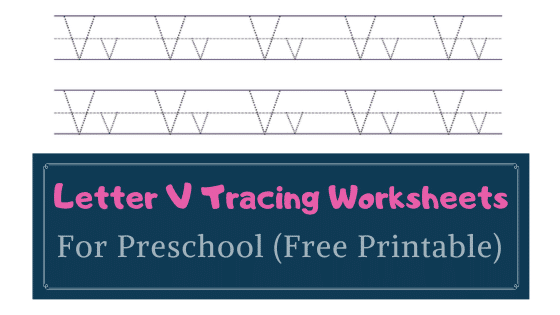
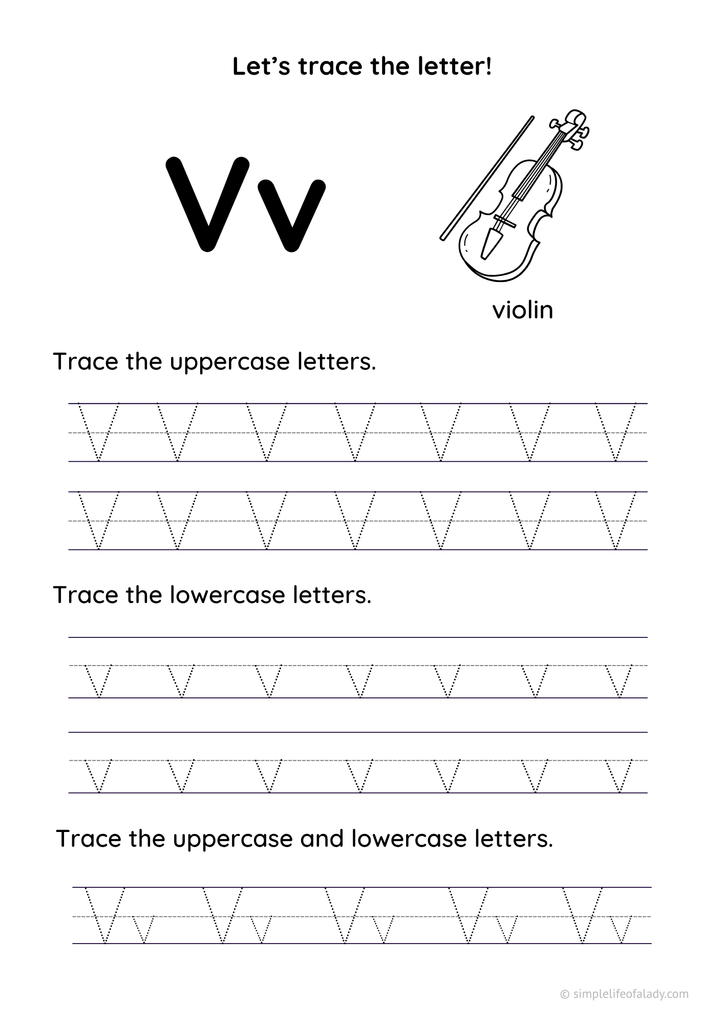
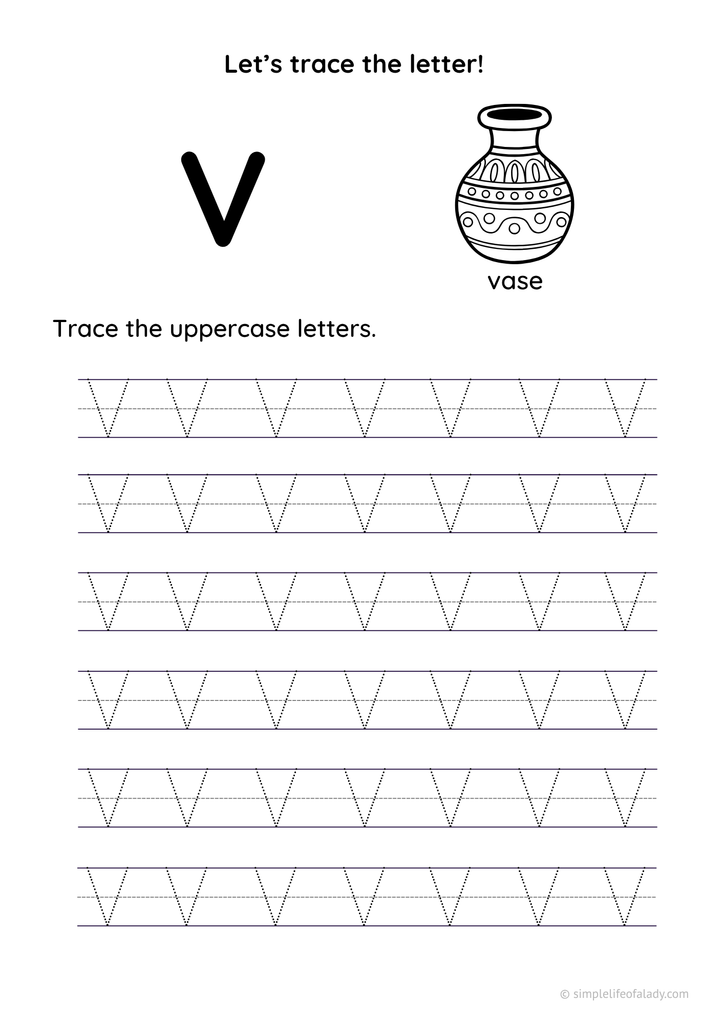
These worksheets will give your child a simple opportunity to practice the uppercase and lowercase letter V while working on pencil control and letter formation.
Download the free Letter V tracing worksheets for preschool here.
You don’t need a complicated lesson to go along with them. A pencil, a few minutes, and some encouragement can be enough.
And remember, the goal isn’t a perfect page.
It’s practice.
If you haven’t tried the previous letter yet, you can find the free Letter U tracing worksheets here and practice that one too.
Talk About the Effort, Not Just the Result
When your child finishes a worksheet, try to resist immediately checking whether every V looks right.
Instead, ask about the experience.
“How did you find tracing the letter V?”
“Did you find it difficult?”
“Will you try again tomorrow?”
This shifts the focus from “Did I get it right?” to “Did I give it a try?”
That mindset can be valuable far beyond handwriting.
Your child will encounter plenty of things that don’t come easily. Learning to appreciate effort helps them see mistakes and difficult moments as part of learning rather than as a reason to stop.
Keep It Simple
You don’t have to turn letter practice into a long activity.
Print a page, let your child trace for a few minutes, and stop while he is still enjoying it.
I had this moment with my son when he still wanted to trace but he was getting it wrong every time and he was starting to feel frustrated. I knew then that he was already tired. So, I called it quits and told him we’d try again tomorrow.
If this happens to you too, remind yourself that it’s okay to leave the worksheet on the table and just come back to it another day.
A little practice done consistently is much more useful than trying to complete a large amount of work at once.
So when your child’s V doesn’t look quite right, that’s not a failure.
It’s simply another chance to practice.
A Little Encouragement Goes a Long Way
As parents, it’s natural to want to celebrate our children’s accomplishments.
But sometimes, the most meaningful encouragement is directed toward the part nobody can see – the effort behind the result.
Your preschooler may not remember how perfectly he traced every V.
But he can learn that trying matters, mistakes are okay, and he can keep going even when something feels difficult.
That’s a lesson worth practicing alongside the letter V, and every other letter your child learns.
If you’d like to keep these worksheets handy, pin this post and come back to it whenever you’re ready for another round of practice.